

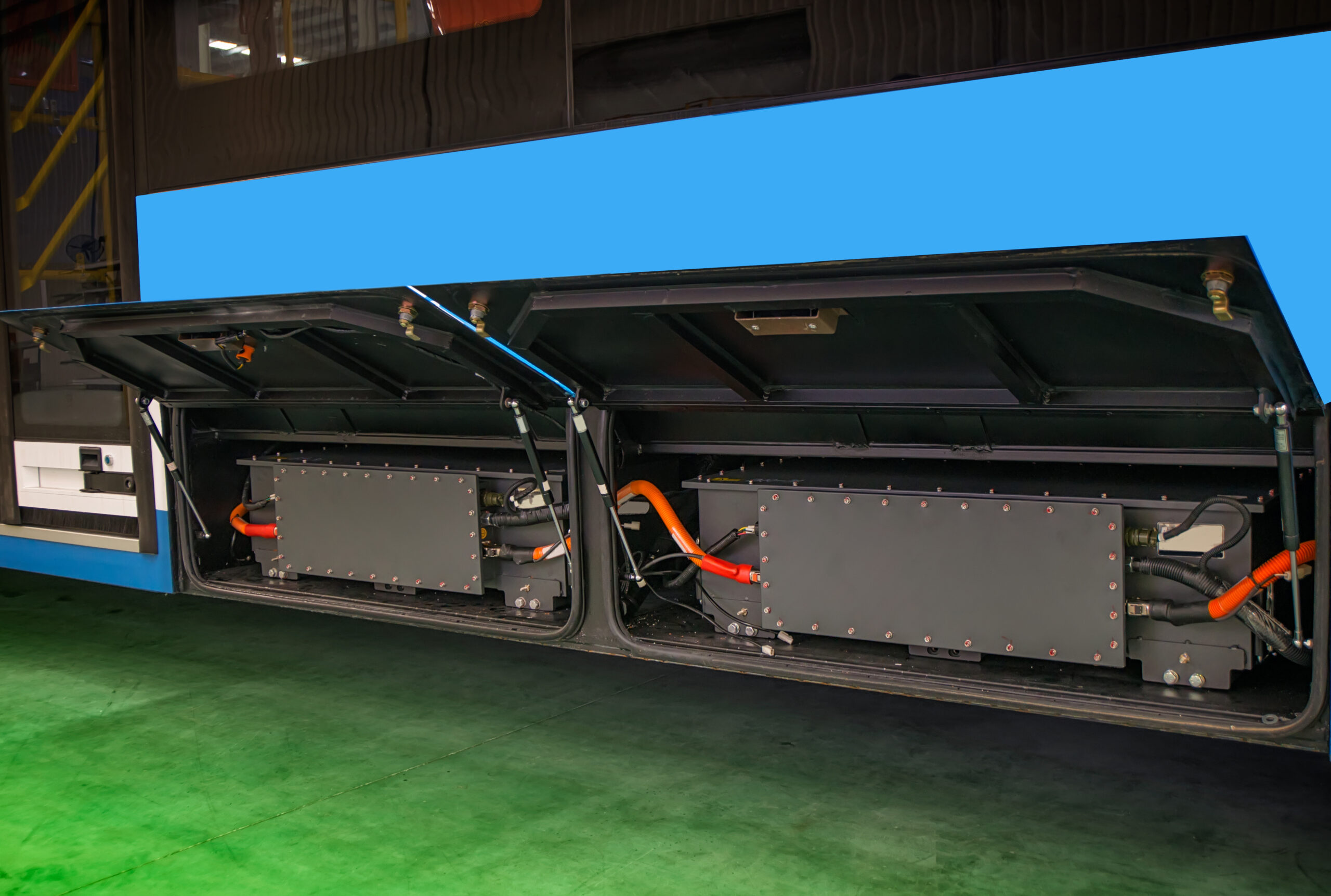
The transition to electric vehicles (EV) is vital to combat the climate crisis. Electric cars in Europe emit over three times less CO2 than equivalent petrol cars on average [1]. They improve energy efficiency, reduce dependence on fossil fuels, and dramatically enhance air quality. To make EVs even more sustainable in the long term, addressing environmental concerns about EV batteries is crucial. To do this, we must embrace a circular economy. A circular EV battery market unlocks the true potential of EVs for our planet, whilst delivering greater commercial value for businesses.
What is a circular economy?
A circular economy is a system that maximises resource efficiency and minimises waste generation. It rejects the traditional linear approach of “take, make, dispose” by favouring a closed-loop system where products and materials are continually reused, refurbished, remanufactured, and recycled. Now, imagine applying this to the EV market. Whilst EVs are significantly better for the environment compared to fossil fuel vehicles over the lifetime of the vehicle, the ecological impact of batteries should not be ignored; one ton of lithium requires 500,000 litres of water and producing a battery weighing 500kg can emit 70% more CO2 than producing a conventional car [2]. Moreover, many lithium and cobalt reserves are also found in developing countries with weak labour standards, resulting in rampant human rights violations, including child labour. A circular model for EV batteries delivers most value for our planet and people, preventing valuable, used batteries being sent to landfills.
EV batteries in a Circular Economy
Second life applications
Used EV batteries often fail to meet rigorous requirements for automotive use due to their degraded capacity. Yet, used batteries often retail up to two thirds of their original energy storage capacity. Repurposing them for less demanding applications maximises their utility and opens up new commercial opportunities – the second life battery market could be worth an estimated $7 billion by 2033 [3]. Second life applications for batteries include emergency power backup for the grid and enabling rapid charging at EV charging stations without overwhelming the grid connection. This could significantly reduce charging costs for fleets whilst helping to manage grid load by storing energy during off-peak hours. Keeping batteries ‘in the loop’ this way has the potential to enable grid flexibility and resilience, alongside increased renewable energy integration. For fleets, this translates to greater residual value at the end of the batteries first life, increasing the economic viability of EVs. Recent findings show that EV batteries alone, largely at their end-of-vehicle life, could provide short-term grid storage demand globally by 2030 [4]

Recycling and reusability
Recycling is a key pillar of a circular model for EV batteries, especially when considering their high carbon footprint. Currently, only 5% of all EV batteries are recycled globally [5]. This becomes increasingly alarming as the demand for EVs accelerates, with 150 million more batteries expected to be produced by 2035. Advanced recycling technology can extract critical materials like lithium, cobalt, and nickel from used batteries, which reduces the reliance on mining for raw materials. Increased investment in such technology is paramount to tackle the complexity of lithium-ion battery recycling. Reusing these metals ensures finite resources are conserved and reduces the damaging environmental and social impact of mining and extraction.
Increasing battery lifespan
Prolonging the lifespan of EV batteries is another aspect of the circular model. Whilst this can certainly be achieved by designing batteries with durability in mind, sophisticated battery and charging management systems can enhance the safety, performance, and lifespan of batteries. These systems deploy data analytics and charging protocols to reduce the risk of premature degradation and thermal runaway, while optimising battery performance and extending battery life. Protecting the battery also reduces the need for frequent replacements. This lowers long-term costs for fleets and preserves the value of batteries for sale and use in a secondary market, highlighting both commercial and environmental advantages.
Leasing batteries through Battery as a Service
Battery as a Service (BaaS) offers an innovative financing approach that supports a circular economy for batteries. Instead of owning batteries, consumers can lease them from service providers. Since high costs prevail as a leading barrier to electrification, BaaS enables businesses to electrify faster by removing the high upfront cost of the batteries. In this approach, a financial incentive is also provided for battery owners to invest in optimising battery life and performance. This reduces replacements required, leading to lower operational expenses for vehicle fleets. Furthermore, BaaS enables businesses to adapt more easily to changing fleet requirements and improved battery technologies. Retaining such flexibility is vital in a rapidly technologically advancing market. Ultimately, BaaS reduces the barriers to electrification whilst protecting the battery to enable reuse after vehicle life – supporting resource conservation and minimising waste.

Adopting a circular economy model offers tangible and transformative possibilities in the EV market, particularly with EV batteries. By pursuing secondary life applications, recycling and reuse, and innovative financing models, businesses can attain commercial benefits and reduce costs to support the transition to electric. More significantly, adopting circular economy practices in the EV market is a decisive step towards building a sustainable future and laying the foundation for a greener transportation sector for future generations. Embracing the circular economy is imperative to combat climate change and build a more responsible, sustainable global economy.
Hitachi ZeroCarbon’s solutions support a circular model for EV batteries
Hitachi ZeroCarbon is focused on supporting commercial fleets throughout their electrification journey. Our ZeroCarbon Battery and Charging Management Services (BCMS) deploy smart charging controls and advanced analytics to enhance battery performance and extend battery life. We also finance batteries, sharing ownership of the asset and managing it on behalf of customers. This lowers the cost to electrify, whilst generating long term value. Our solutions support a circular economy for EV batteries, prolonging their use and protecting their value for applications at end-of-vehicle life. By managing and optimising EVs for commercial fleets, our customers focus on their operations whilst reaping the rewards of the EV batteries during and after first use.
Get in touch to learn more about our solutions and how to maximise value from your EV batteries.
[2] The Paradox of Lithium (columbia.edu)
[3] The Second-Life EV Battery Market to Reach US$7B by 2033 | IDTechEx Research Article