

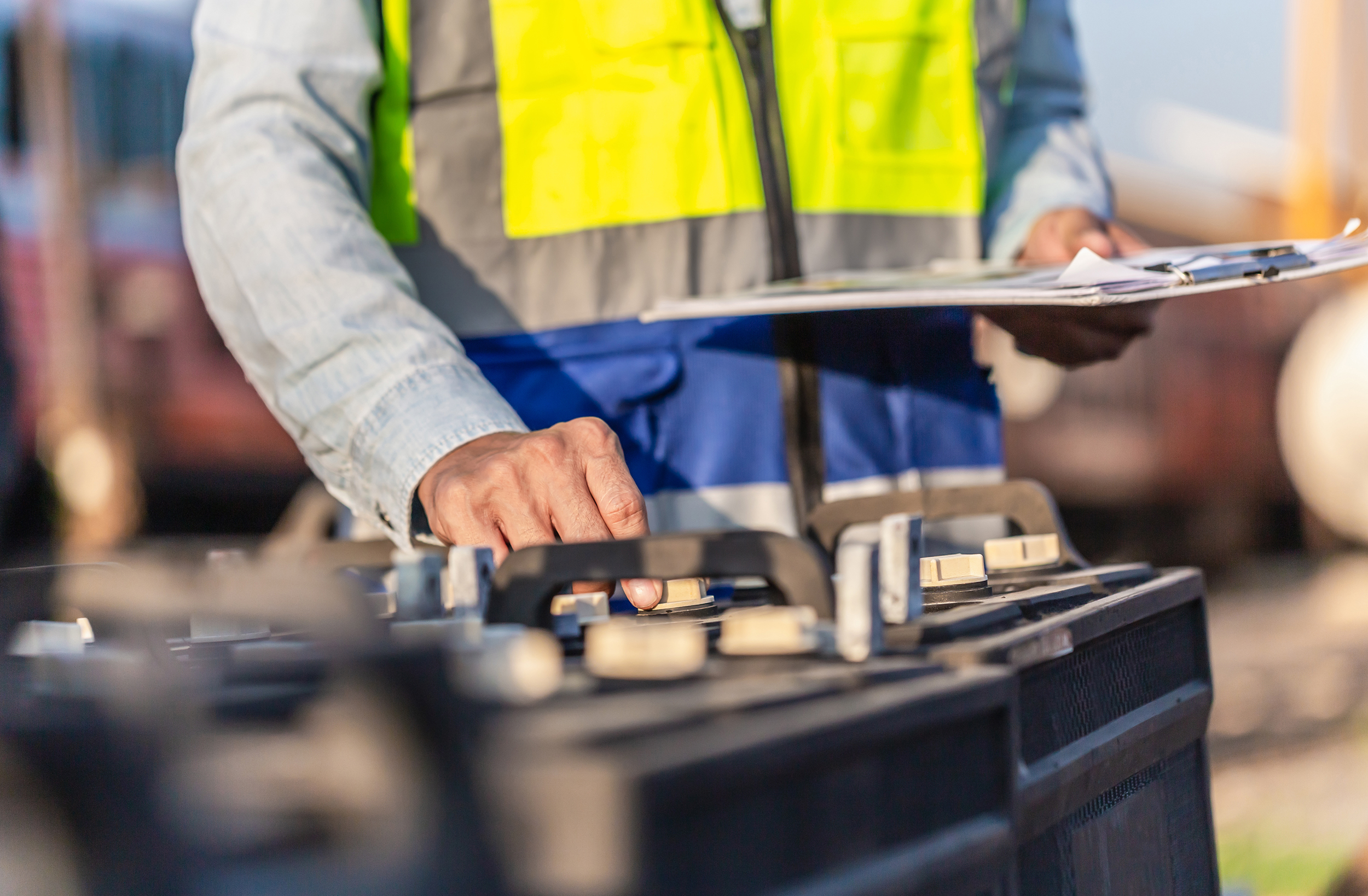
Millions of EV batteries will reach the end of their automotive life before 2030. What happens to them matters, both economically and environmentally.
That’s where second-life applications come in. Rather than sending retired batteries straight to recycling, repurposing them unlocks significant remaining value.
What is a second-life battery?
When an EV battery can no longer meet the performance demands of a vehicle, or has exceeded its warranty, it isn’t necessarily spent. Most retain 70–80% of their original capacity and so can be genuinely useful elsewhere.
A second-life battery is one that has been retired from its first use in a vehicle and repurposed for a different application. This is distinct from recycling, which breaks batteries down to recover raw materials.
Repurposing keeps the battery working as a unit. It extends the lifecycle of an existing asset instead of ending it prematurely.
Why are second-life batteries important?
As EV adoption grows, so does the volume of batteries that near the end of their life. Without a clear second-life pathway, that represents a mounting waste problem.
Repurposing supports the circular economy by keeping materials in productive use for longer. It also reduces demand for finite resources like lithium and cobalt, which are costly and carbon-intensive to mine.
There’s an economic case, too. When value is recovered from retired batteries, it creates new revenue streams for manufacturers, fleet operators, and energy providers alike.
What are second-life battery applications?
The range of second-life battery applications is broad, spanning residential, commercial and utility-scale uses. Some of the most established include:
- Battery energy storage systems (BESS)
- Renewable energy storage for solar and wind installations
- Grid support and frequency stabilization
- Residential energy storage
- Commercial and industrial energy storage
- Backup power systems
Of these, stationary energy storage is currently the most mature application. EV charging infrastructure plays a closely related role in this energy ecosystem – take a look at our guide to smart EV charging to learn more.
How do second-life batteries work?
Moving a battery from first life to second life isn’t as simple as unplugging it from a car and connecting it elsewhere. A structured process ensures safety and suitability at each stage.
- The battery reaches the end of its EV lifecycle
- It is collected and transported to a processing facility
- Technicians assess state of health and residual capacity
- The pack is repurposed as-is or disassembled into individual modules
- It is integrated into a new energy storage system
- The battery is deployed in its second-life application
Step three is where the pathway forks. Batteries that pass health assessments move forward into repurposing; those that don’t are redirected to recycling.
Benefits
- Extends battery lifecycle and reduces waste
- Supports integration of renewable energy at scale
- Can lower costs compared to new battery systems
- Creates new revenue streams for manufacturers and fleet operators
- Reduces pressure on raw material supply chains
Second-life batteries vs recycling
Recycling and repurposing are often discussed together, but they serve different purposes. Choosing between them comes down to the battery’s condition and how much capacity it retains.
Recycling recovers lithium, cobalt and nickel for use in future battery production. It’s the right route when a battery is too degraded to operate safely in any second-life setting.
Repurposing, on the other hand, generates more value from the battery as a functional unit. Rather than dismantling it, repurposing keeps it productive for years longer.
A well-designed circular economy depends on both. Check out how Hitachi ZeroCarbon is supporting this shift through ZeroCarbon Charge.
FAQs
What is a second-life battery?
A second-life battery is a retired EV battery that has been repurposed for use outside of a vehicle. Rather than being recycled, it is put to work in a new application where its remaining capacity is still useful.
How long do second-life batteries last?
Lifespan depends on the application and how well the battery is managed. In many stationary storage settings, second-life batteries can remain in service for five to ten years.
Are second-life batteries safe?
Yes, when they have been properly assessed. Before deployment, batteries undergo testing to confirm they meet safety thresholds and those that don’t are directed to recycling instead.
What are second-life batteries used for?
Stationary storage, backup power, residential systems, renewable energy storage are the most common uses. Anywhere cost-effective stationary storage is needed.
Are second-life batteries cheaper than new batteries?
They can be, in lower demand applications where capacity degradation is acceptable. But testing and repurposing costs should always be included in any direct comparison.
What’s the difference between recycling and repurposing a battery?
Recycling dismantles the battery to recover materials for new production. Repurposing keeps the battery intact and puts it to work in a new application, which extends its life, rather than putting it to an end.