
Electric Freightway

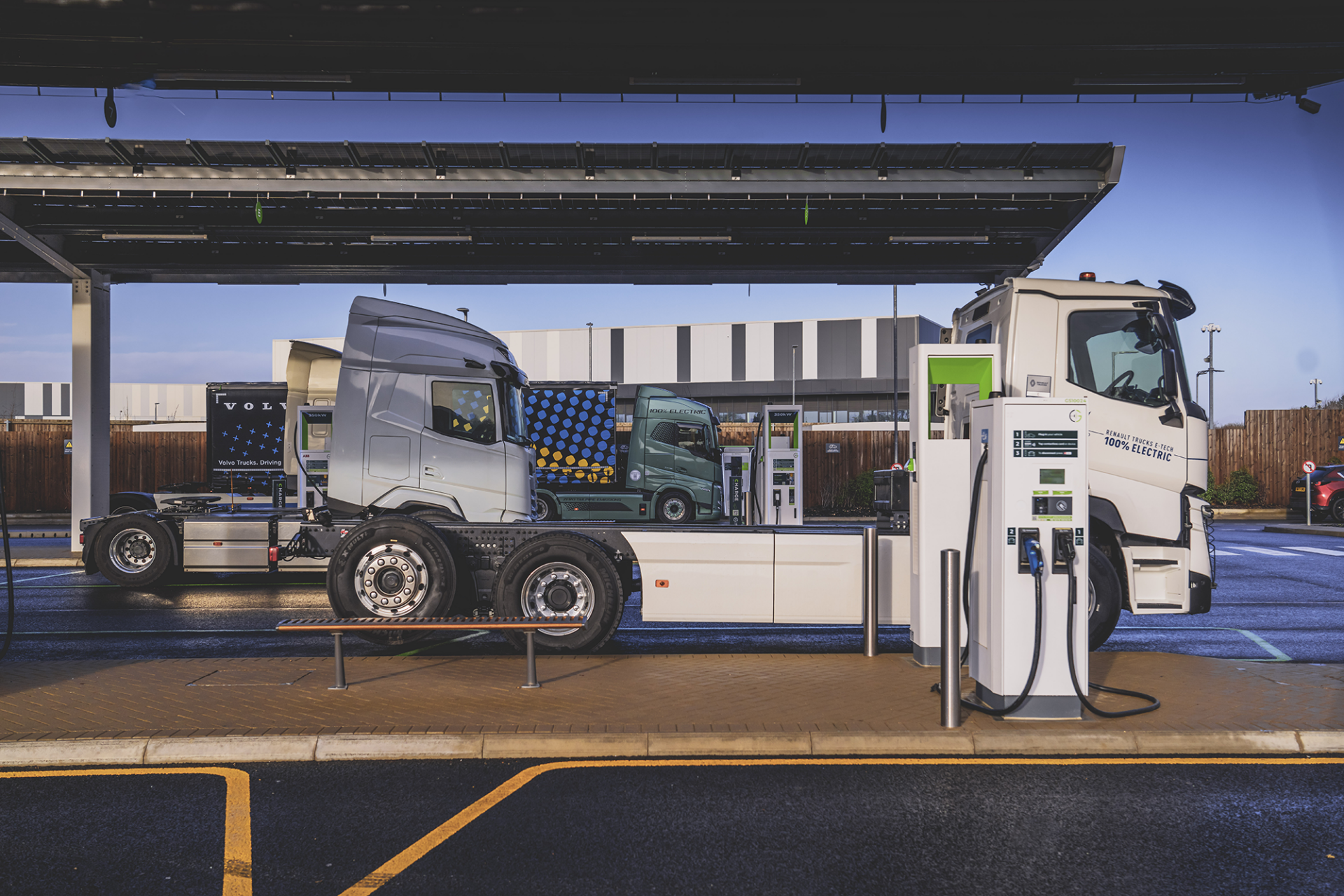
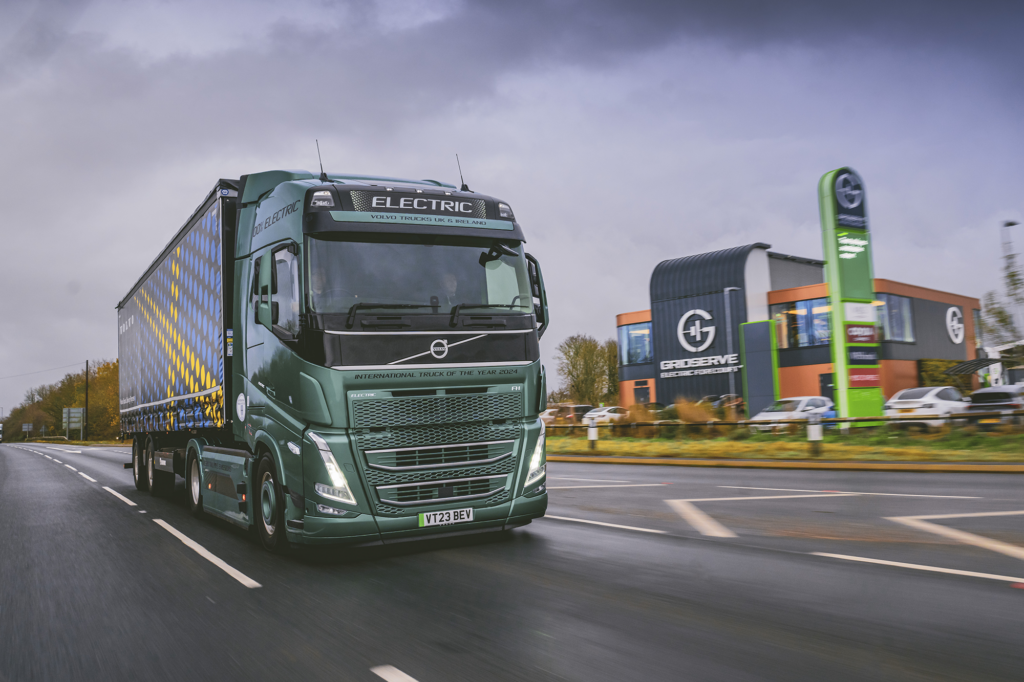
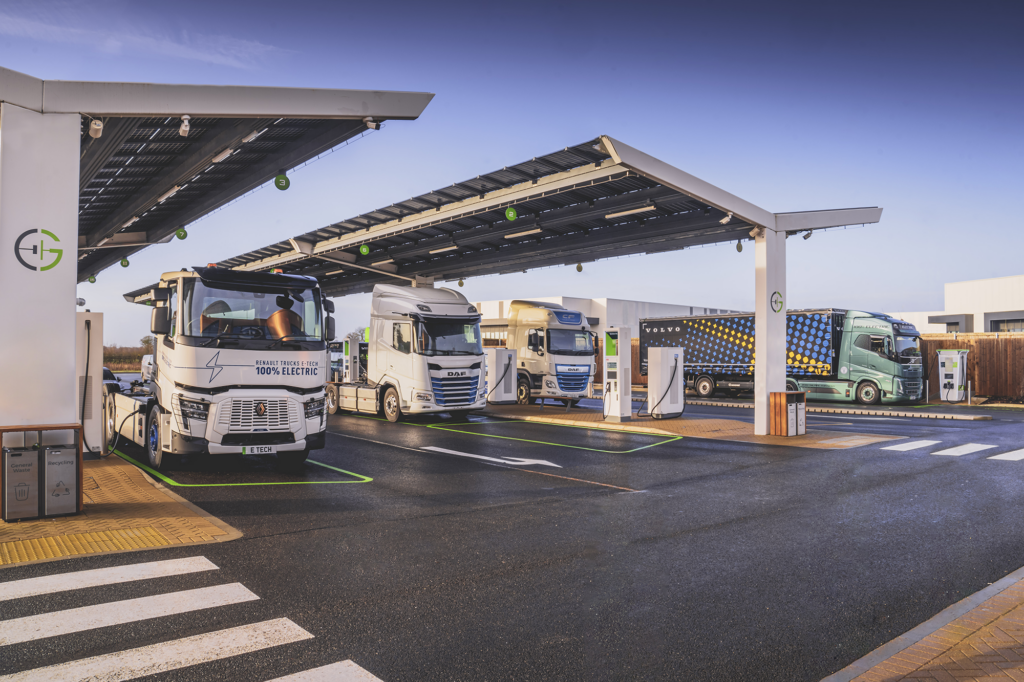
We were the principal partner in GRIDSERVE’s Electric Freightway project, delivering one of the biggest and most advanced eHGV charging networks in the world.
Decarbonizing the heavy goods sector

Heavy Goods Vehicles (HGVs) contribute around 20% of the UK’s transport greenhouse gas emissions and decarbonization of this sector is essential for the UK to meet its 2050 net zero targets.

Larger eHGVs are only just coming to market. They currently cost significantly more to purchase than equivalent diesel trucks and there is very limited eHGV charging infrastructure in the UK, with existing car chargers not designed to meet the needs of HGV operators.

Despite this, the transition needs to start now, as vehicle operators will no longer be able to buy new diesel HGVs after 2040.

Introducing the Electric Freightway project

GRIDSERVE's Electric Freightway project is helping to kick start the transition process by implementing eHGV charging infrastructure across the UK and providing HGV operators with the information they need to plan the successful adoption of fully electric vehicles.

The project is funded as part of the Department for Transport and Innovate UK-backed Zero Emission HGV and Infrastructure Demonstrator programme.

Our role in the project

Working with lead partner, GRIDSERVE, we collated, analyzed and reported on data throughout the project, leveraging experience from our role in the world's largest commercial electric fleet trial, Optimise Prime.

This involved analyzing routes, vehicle and charging session data including the optimization of battery health, range and charging infrastructure monitoring, and evidence-based Total Cost of Ownership modelling to support investment business cases for future eHGV deployments.

Electric Freightway Reports

HGV Carbon and Cost Calculator

We’ve developed a simple, interactive comparison tool designed to help you evaluate the pros and cons of HGV fleet electrification from both commercial and environmental perspectives.

Using real-world data and your chosen operating profile (mileage, ownership length, route types and payloads), the tool compares two new 40–44t HGVs — one electric and one diesel — and provides a year-on-year breakdown of estimated cost and carbon footprint across a five-year lifecycle.

Go to the tool

Watch our Electric Freightway videos